review

Music quickies – Vektor, Current 93, Katatonia, Devin Townsend Project, Behemoth

vektor-terminal_redux Vektor – Terminal Redux (2016)
Vektor’s hyped 2016 release is astronomically progressive metal. Vektor was the best modern thrash metal band for years, it is about time for them to get recognition. For an album that sates me midway, it is astoningly good but it would be more enjoyable shorter. It’s really not a better album than their previous efforts but still ridiculously good and full of everything tasty.
9/10
Listen: Mountains Above The Sun + Ultimate Artificer

0Current 93 Calling For Vanished Faces Calling for Vanished Faces (I: Funeral Music for
Us All) and (II: Love, Sleep And Dreams) (1999)

David Tibet’s overtheateritical aesthetics drove this Sol Invictus fanboy mad for half a decade. “Maybe, I might finally appreciate something of theirs?” I thought. I: Funeral Music for Us All starts as an oddities collection I cannot recommend less but picks up on Coal Black Smith, staggers to its most annoying pieces and picks up decently at Hourglass (For Diana) soon to turn into 1 hour 30 minutes of pure neofolk bliss. Probably my favourite release on which I completely skip 1/3 of it.
I 7/10
II 10-/10
Listen: The whole second side, except the 4 ending tracks, is blissful.

570160Katatonia – The Fall of Hearts (2016)
Some outerworldly charm with heartbreaking atmosphere. Drags time to time yet still wrenches heartstrings every minute. Passer‘s descending scale should be obnoxious yet it is genuinely alluring. How on earth did they make it work.
Listen: Decima & Residual for angsting in a dark room, Passer for prog.
Grade upcoming


devintownsendprojecttranscendencecdDevin Townsend Project – Transcendence (2016)
Middle aged Devin is zen and re uses his components but those lures still amount some catch. Not bad, but I may have heard too much “c-grade progressive metal” (quoting their own making of documentary) to fully appreciate this kind of polished sound anymore. Danger lurks somewhere else. Here’s hoping the next album goes permanently Higher.

The second album is simply too much as can be noticed from the lack of recognition it has gotten. The (demo) titles are a very Devin Townsendish joke, the stuff is nearly as polised as the first. Love the commercial suicide though, it could have well been released it as a lone piece.
Listen: Higher
7ish/10

395440Behemoth – The Satanist (2014)
If you can think of a more epic way to start a track than in the title track of The Satanist please let me know. The track does not carry the weight of its beginning but the album does. The wall-of-sound production, mildly reminiscent of Emperor, gives it weight unlike many releases.

Incorporating a massive and satisfying finale that only runs through the last minute of Blow Your Trumpets Gabriel requires so much finesse. O Father O Satan O Sun! towers above the rest of the release with another finale, this time based on a monster riff and oration like an esoteric sermon. Here’s hoping The Satanist won’t be the last of Behemoth like Nergal hinted in the past.
Listen: Blow Your Trumpets Gabriel & O Father O Satan O Sun!
Grade upcoming
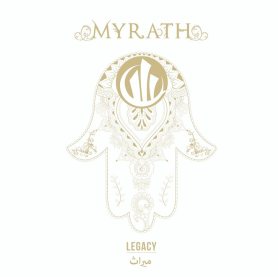
Myrath – Legacy / ميراث – Tunis

555267Myrath is likely the biggest metal band yet to come from Africa. In their 10 years of activity they have released 4 albums of solid standard.
Myrath play melodic progressive metal but during the years they’ve calmed down on the metal and progressive and added more symphonic, almost bombastic elements. The latest album Legacy does not emphasize heaviness and the progressive elements are interwoven in the tracks. There’s no Dream Theater like instrument extremities that were present on their earlier years. It is still very much a metal album, even though the lightweight video track Believer might fool the unwary.

The musicianship and songwriting is top notch. The more crooked and catchy bits like the sudden rhythmics of Nobody’s Lives or the stadium chorus of Get Your Freedom Back are natural parts in the body of the tracks. Nobody’s Lives also includes one of the most notable choruses of the album where English is for a moment replaced with Arabic. The c-part of the said track has a mighty rhythmic groove and at the same time to untrained European ears sounds like a prayer call from a minaret!

The most thrilling component of Myrath are the North African/Tunisian folk influences they augment. Singer Zaher Zorgati deserves a very special mention of his extremely pleasant voice and how he floats his voice in true Arabic fashion. I’ve never heard that being used in metal before and it sounds fantastic. Surprisingly Myrath also adds a few bits of electronic backgrounds here and there.

After the first 3 full tracks of near bliss the quality goes down, I noticed myself humming and sing-alonging way less to melodies and choruses of the latter part of the album. The Needle is a track that for the most part could have been made by any Western band and that is probably why it is less interesting. Duat and Endure the Silence also do not have as strong a melody and choruswork as the rest of the album. Through Your Eyes is a good track with mildly too sweet chorus (although it must be pointed out that it fits the lyrical theme) and Storm of Lies is a good track overall but just more of the same, failing to be the epic closer I was hoping for. Luckily The Unburnt and especially I Want to Die, with its touching lyrics, bring some top notch quality for the latter part of the album too.

The Unburnt’s lyrics surprise by showcasing the story of Daenerys Targaryen of A Song of Ice and Fire (or Game of Thrones if you prefer the watered down albeit still good tv-version). It encompasses such ethnic elements so naturally that in my mind it has already intertwined as a part of Daenerys’s character.

Myrath’s strength and weakness lay in the same area, accessibility. For a progressive metal album it’s song structures are too similar to each other to hold interest on top of the scale. However it is really hard to point out many wrongs in what they do. Picking up a single track from the last part of the album yields almost no faults. For someone who is looking for really challenging progressive music, Legacy is probably not ideal, but it has accessibility to spare for more lighthearted music fans who are not afraid of some surprising twists.

8/10

Salomè Lego Playset – So Much Was Lost In The Process Of Becoming

PrintWhen you pick a free download post-rock album from an owner of a weblabel who also released it, more the surprise it is to feel enthralled almost immediately. But when the second guitar melody of L’animale morente meanders in one can’t help but feel encompassed. If this is not enough, blissful saxophone comes in to complement this lulling tune.
Salomè Lego Playset’s So Much Was Lost In The Process Of Becoming is a dark themed lull headed by frontman Nicola Boari. It meanders in terrains that fit right into my Finnish melancholy conception. It visits experimental grounds as well, but mostly through field recording sounding ambient that adds to the atmosphere.

The quality of tracks does go down after the brilliant starting trinity L’animale morente, Heimarmene and Humanity and Paper Balloons. The next few still have some serious merit but are in professional terms a tad boring. The Fountain and Il Deserto e le Fortezze are dark as opposed to starting three are melancholic. After slow and solid start The Gorge yonders welcome variation as heaviness but is the saxophone a bit off-key?

The last track Dolce Mattatoio is hard to grasp with its 20 minute length and lots of field recording and noise elements. But it doesn’t bother the big picture as its the last track. I have a great affection to last tracks that end with 10 minutes of meaningless humming leading into a hidden track! Dolce Mattatoio cannot be called meaningless humming though, it is a vastly experimental track with a lot of noise and field recording stapled together with familiar instruments from previous tunes. All in all, quite a staggering piece and very much unlike the rest of album.

So Much Was Lost In The Process Of Becoming is a professional sounding indie record with satisfyingly crunchy and organic sounds. The vocals are very delicate but they work in bands favour.

The experience was deepened further by this heartbreaking official statement that Salomè Lego Playset released a few months ago:
“2011. 5 years have passes and they couldn’t feel heavier. Salomè dismantled and so has a part of me gone forever. I honestly can’t say what I’ve done in the past 5 years since. Nothing. This lies as testimony of what I once was and what I once believed in. How long will this go on for. How long do I have left. Should anyone notice, listen, that’s somebody else he will find.”

The statement describes some of the creation pains well and I can only say that Spettro records has seemed to publish quite a lot of albums in the past years. Most of us do not even release one great album in our lifetimes  ;).

8/10

Free download:
http://freemusicarchive.org/music/Salom_Lego_Playset/So_Much_Was_Lost_In_The_Process_Of_Becoming/
or
https://salomelegoplayset.bandcamp.com/album/so-much-was-lost-in-the-process-of-becoming
Salome Lego playset info & discography:
http://www.spettrorec.com/index.php?/artists/salome-lego-playset/

Rudra – Brahmavidya: Immortal I – Singapore

296609Rudra is a veteran band from Singapore. They’ve produced 7 albums since 1992 which all have gotten plenty of good critical acclaim but somehow managed to elude my radar so far.
Every eccentric band is supposed to have their own genre and so do Rudra. They call themselves Vedic metal which comes from their incorporation of Sanskrit Vedic literature, philosophy and ancient mantras (shlokas) to blackened death metal basis. They also encompass traditional Carnatic music to their compositions. These obscure elements are ultimately what keeps their ship afloat as they add plenty of interesting elements.

Brahmavidya: Immortal I is their 6th effort, while having plenty of innovative moments its also plagued by mediocreness.

The reason why I’ve given a lot of spins to the record is that the biggest kicks are served right in the beginning. Now, therefore is an enlightening starter with smoothly growing tension and interesting sections. The mantras are also really strong here and add element unlike anything I expected. Guitar leads wander in almost Arabic fashion, reminding of Myrath.

The next track Illusory Enlightement is the best of the album, with its magical chanting chorus.

Almost every track has some fascinating elements and individual melodies. However the lack of constant tension, great riffs and melodies and the unsuspensefulness of the vocals becomes evident as the album progresses. Some of the foreign elements like the mantra chorus of Incredulous Void are peculiar as it sounds like some of Finnish children’s wordplays (Appilan pappilan apupapin papupata pankolla kiehuu ja kuohuu. Pappilan paksuposki piski pisti paksun papukeiton poskeensa.). Whether its a good thing or not depends on the mindset of the listener.

Brahmavidya: Immortal I is an eccentric kettle left to boil while the fuse burns out. In the end its just lukewarm but while its hot, the early consumables will for sure give some satiety to the fans of bands such as Melechesh or Myrath.

7/10

Downfall of Nur – Umbras de Barbagia – Argentina

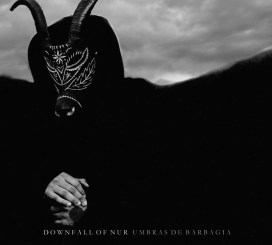
DownfallOfNur-UmbrasDeBarbagia-CoverDownfall of Nur is a one man black metal project headed by Antonio Sanna. He is originally from Sardinia, Italy but moved to Argentina at 11 years of age. Umbras de Barbagia was released in 2015 with Antonio being just 19 years of age. It is incredible how a 19 year old Argentinian musician could make an atmospheric black metal album so mature this early in his career.

Actually Umbras de Barbagia is not strictly a one man black metal album as vocals were made by another Argentinian metal musician Dany Tee (In Element, Aether, Seelenmord), who also played a big part in production.

The killer track is placed right in the beginning, Golden Age starts with magnificent melancholic instrumentation containing acoustic guitar, woodwind instrument and soon, bagpipe!? In fact these non-metal instruments are not just any instruments, but traditional Sardinian instruments Launeddas and Quenacho flute. Both are woodwind instruments and Launeddas has a similar sound to bagpipe. It consists of three pipes where one serves as a drone and two others function with the melody.

launeddas2b022bcerdec3b1a

Launeddas

With a whopping 17 minute length Golden Age takes a while to develop into metal terrains but does it with a bang. Oldschool blastbeating with depressive black metal screeching. For a young artist like Downfall of Nur it is astonishing how well the album is balanced. Both metal and calmer parts have a lot of dynamic and the quality of a recording is really high.

The tracks vary stylishly between black metal, melodic and folk bits however there’s a lot of repetition which sometimes works as a disadvantage. All main tracks are over, or nearly 10 minutes long. Long songs work well in developing atmosphere but every track becomes a tad boring at some point. Most notably the 2 minute outro of Ashes leading to 2 minute intro of the title track where in neither almost nothing happens.

The bread and butter of the album is solid as heck though. From the magnificent interlude of Ashes to brilliant finales of Golden Number and Downfall of Nur which all encompass Launeddas and Quenacho brilliantly. Downfall of Nur travels somewhere near the grounds of Agalloch and Ghost Bath, but has significantly more airy melancholic folk passages. They’ve also picked elements from oldschool black metal with funeral doom seasoning. Atmospheric black metal is such a wide genre that these elements are not anything abnormal but the way they’ve been meshed together makes Umbras de Barbagia an enticingly abnormal effort.

8/10

References:
http://www.nocleansinging.com/2015/11/18/an-ncs-interview-downfall-of-nur-antonio-sanna/

Genocide Shrines – Manipura Imperial Deathevokovil (Scriptures Of Reversed Puraana Dharmurder) – Sri Lanka

505952If you are still reading after the whopping album title I can only take it that you feel some kind of enthrallment. I’ll be first to admit I jumped straight in it without any googling but pretty soon it became apparent that small search might provide some understanding of the albums thematics. Taken that I can only understand ~4.5 of the 8 words in the album title (Imperial, Scriptures, Of, Reversed, ***murder)…
When the distorted voice clip in the sixth track Hurl Burning Spears To Exhume The Raavanic Throne Of Sivvhela Retaliation violently commands RAAVAN at the very latest one should realize Genocide Shrines are onto something special.

“Ravana” is the the primary antagonist in the Hindu epic Ramayana, where he is depicted as the king of Lanka [1]. “The life of Ravana, one of the most powerful beings ever to roam the universe, if Hindu legends are to be believed, had unfolded in the small island Sri Lanka, where he ruled with mighty power over gods, humans and demons.”

And what a name Hurl Burning Spears To Exhume The Raavanic Throne Of Sivvhela Retaliation is to sum up the experience. Genocide Shrines is a brutal death metal band with such a wall of sound it’s not immediately clear what they stand for. On further listens it becomes apparent that while the western influences are there, they aren’t of influx. The rhythmic heritage has seemingly taken a lot from local surroundings, savage tempos and violent atmospheres remind of the rich and violent history of Sri Lanka. Sri Lankan civil war, which left 80 000-100 000 dead in 25 years, ended just 7 years ago and there are still accounts that the minority and losing side of the civil war, Tamils may be tortured by the officials.

Rich chants and percussions of an unknown lore further thrust the experience away from Yankee and European colleagues. The outro Pillar 3 (Triumphing Of The Three Worlds) sounds like it could be a street recording of a Sri Lankan shaman.

The brutal basement sounds are reminiscent of good old days where classic metal records were recorded with suspicious equipment, delivering billowing muddy soundmass instead of the crystal clear liquid of nowdays. There’s undoubtedly its place for crystal clear production, but so is for sound that could have been recorded in torture chambers.

In an interview with the vice [2], the frontman Chathuranga Fonseka (a.k.a. Tridenterrorcult) states: “I had made a few important changes to my daily living with the intention of raavanic devotion to delve completely with murderous attentiveness and focus on the ascent. Traditions were continued as it has been done in the past during recording sessions. Mr. Obliterator from Serpents Athirst frequented these rituals to assist BlasphemousWarGoat with various elements.”. The interview makes clear to state that this band pours out some serious devotion on their album processes, encompassing a lot of their ancient mythologue. Just read the amazingly mystic track titles. If you understand what the hell they are referencing to and aren’t a native Sri Lankan, I salute you. This big unknown is part of the charm.

Black metal-esque guitars and rumbling drum-patterns of Subterranean Katacomb, Termination Temple (Henotheistic Primal Demiurge) among many others demonstrate the musicality of the group. My favourite moment is probably the primal ritualistic riff of Ethnoheretical Padmavyuha Consecration which effortlessly slithers into a ~40 bpm downstroke bruising. Militant Thrishul (Eradiction Puja) and Aerialdishamanic Bonethrone Omega both have a mildly melodic riff to present further variation.

Nearly all the tracks have some slower material, usually violent sludging, which makes it clear that Genocide Shrines is not leaning just to walls of sound and constant high tempos in delivering their mostly oppressive message.

But I never found out what is a reversed dharmurder.

9-/10

Bandcamp:
https://vaultofdriedbones.bandcamp.com/album/manipura-imperial-deathevokovil-scriptures-of-reversed-puraana-dharmurder

References:
[1] https://en.wikipedia.org/wiki/Ravana
[2] http://noisey.vice.com/blog/genocide-shrines-interview-2015

Kingston Wall – Best hidden secrets of Finnish Rock

hqdefaultWhen I was a kid in the middle of the 1990s, the kids who were serious about rock and metal listened bands like Metallica, Iron Maiden, Kingston Wall and Guns n’ Roses. I always thought Kingston Wall was one of those big-selling ass-kicking rock bands. And backwards thinking I should have been more right.
Kingston Wall should have been there, but there are errors in the world. Kingston Wall has all the qualities of the household major rock bands, except the major thing, and that isn’t the quality of music. They were never properly advertised and their music was not spread by a huge corporation. Their albums were first released by their front man Petri Walli’s own company Trinity. Afterwards they’ve been released by multiple different companies, the first rerun being years after the band had broken up, 1998. Also, they were very 60s in the forwards thinking 90s, and hard to copy.

Still they became “the” progressive rock group in Finland after Wigwam. Almost all Finnish persons who are interested in rock and metal have had their Kingston Wall phase. They’ve been a massive influence to Finnish musicians, one of the most notable being Amorphis (and pretty much every progressive rock or progressive metal group since the 2000s).

Kingston Wall was masterminded by a charismatic and extremely talented vocalist and guitarist Petri Walli. The other two core members were Jukka Jylli (bass) and Sami Kuoppamäki (drums). In fact Sami Kuoppamäki was their 3rd drummer who joined the band when they had already played over 60 gigs (with Petteri Ståhl 1987-1989 and Timo “Tinde” Joutsimäki 89-90).

They released three albums from 1992 to 1994. They broke up in 94 and Petri Walli went on to finalize their career by killing himself in 1995. He was a very interesting, almost manic depressive figure. In the spring of 2014 a  book about him and the career of Kingston Wall was released by Like (http://like.fi/kirjat/kingston-wall/). I cannot recommend it enough, though so far it is only in Finnish (Feb 2016).

kw3

I (1992), II (1993) and III Tri-Logy (1994)

II, is generally considered the best album. I is a classic first album in a sense that it has a bunch of tracks from various time periods of the band. III incorporates elements of electronic music being clearly the weirdest and hardest to approach. At the time Walli was heavily influenced by his trips to India and Ior Bock’s Saga which pretty much based Finland as the centre of the world, spoke for the virtue of “save and not spill ones semen or female ejacula”, and based a lot for word alterations which were made to find the basis of the word (http://en.wikipedia.org/wiki/Ior_Bock#Outline_of_the_Bock_Saga + see the last song Alt – land – is on the bottom which explains the basics of this belief).

All 3 are solid albums but II is the Master of Puppets, Appetite for Destruction or Number of the beast of Kingston Wall.

Apparently Kingston Wall was a very tight live band. Biggest strength was to have a lot of variety, strong themes and a freedom to improvise combined with a lot of musicianship. They for example hosted their own “FreakOut” clubs were they did everything but stick to previously decided song lists.

Big part on why they are so good in the albums is that they played live for years before their first official recording. The bassist Jukka Jylli said that the tracks in their first album are just one versions of the songs. He did not even listen the album after its creation because he didn’t want to learn to play the tracks some certain way, there had to be freedom to improvise. They played only one gig outside of Finland (Tallinn).

Kingston Wall is not a classy, but ultimately hard to reach progressive rock band. They have a lot of psychedelia but also supremely catchy melodies and songs with easier structures. Their tracks are filled with hooks and catchiness. Never still losing the progressive edge and packing a lot of elements from Asian music. The way a hinterland Finnish band incorporates mysticism from Asia with hooks and instrumental proficiency is ludicrous really. But the tracks stay superbly interesting and the sounds are top notch for its time.

For me, Kingston Wall is easily better than any of the bands mentioned in the first paragraph. Strangely their biggest hits are also among their best. Here are few recommendations.

Jimi Hendrix cover – Fire (I, listen the drummer Sami Kuoppamäki go berserk, Petri Walli once said that “if Sami realized how good he is, his head would explode”).

We cannot move (II), one of their best and catchiest tunes with lots of Middle-Eastern influence.

http://www.youtube.com/watch?v=8uoGWL7GIkA

A ballad Shine On Me (II):

If you want to start from a more difficult bit. Here is the The Real Thing (III), an 18 minute long opus:

Alt – land – is (III) – explains the basics of the odd mythlogy Bock’s Saga, which Walli used as the backbone of their album III Tri-Logy

Numen – Basque Black Metal

Like Catalonia, Basque Country has stated its interest in independence from Spain. I do not know whether Numen is one of those who wows for independence or not but a big attractor in their uniqueness is the Basque language, Euskera.

They could be described as oldschool black metal with folk influences and folks, THIS is how folk influences should be used. With the likes of Moonsorrow and Primordial Numen integrates folk to their sound without unnecessary hobbit-like dibbling and dabbling ’round the tree with beer cogs in hand. Folk is just one of the elements, not constant flute frenzy. Numen should even appeal to Black metal purists as their sound really takes a bow to oldschool black.

numen-logo

The idea of Black metal from Basque country isn’t that far fetched for me. Pretty much my first touch to black metal was Numen. Which still to this date is among my favourite Black metal artists. I found Numen through long-defunct Audiogalaxy in about 2002(?). In Audiogalaxy groups it was normal for people to send tracks to everyone in that group. Numen is one of the many class acts I discovered that way.

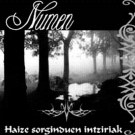
15166

Their first EP Haize Sorginduen Intziriak (2000) (Screams of bewitched winds) never went to my regular listening cycle, except Ehitzari Beltza which was an instant favourite. I’m still not sure what it means, or how the hell it is pronounced what really stood out for me was the obscure sounding language. Not even mentioning the sound of a thunderbolt in the end and odd laughing at 3:04 both of which are such a cliche but then were awesome. Still, unlike some of my favourites from that time, the song is still decent and the harsh but beautiful language fits the mood perfectly.

495646300-galdutako-itxaropenaren-eresia-coverThe album that kicked off the Numen fever was their first full length Galdutako Itxaropenaren Eresia (2001) (Chant of the Lost Hope). It is still a strong effort with some really unique instrumentals. My personal favourites are Iheslaria which is both beautiful and brutal at the same time and the overly melodic Ama Lurra.
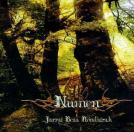
After Galdutako, Numen set the standard even higher with a good EP …Jarrai Beza 29785Kondairak (2003) and what many think is their best work, full-length Basoaren Semeak (2004). The most interesting piece of …Jarrai is Mari (Su Ta Gar Cover), it embraces the melodic aspects of Numen, being a cover of a heavy metal band. It is also an intriguing piece of history as Su Ta Gar is one of the most known Basque metal bands and also controversial. They’ve been around since the end of 1980s and released multiple albums.
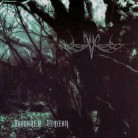
45657Basoaren Semeak is a thick, haunting but natural sounding record which has obviously been influenced by a lot of Norwegian black metal greats. Its sounds are a huge step up from Galdutako… and the band developed in both song-writing and instrumental proficiency.
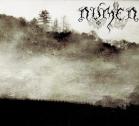
 

Their latest album is a self-titled album from 2007. Its sounds are not 174819as aggressive as Basoaren Semeak and the songs are longer and more complicated. There is a distinctive increase of epic, almost cinematic qualities, like the melancholic brilliance in the finale of Gauaren Irrifarre Izkutua which turns from standard but charmingly crooked black metal to a wonderful mixture of depressive black and clean acoustic guitar.

It is a pity that Numen has not released anything since as their discography is packed with quality. They seem to be still active as they have played gigs now and then.

It is also impressing that I can still spell stuff like Galdutako Itxaropenaren Eresia correctly!

You can find all their releases from bandcamp: http://numenblackmetal.bandcamp.com/

2018 edit, 2007 s/t album is now in Spotify:


Zuriaake – Afterimage of Autumn (葬尸湖 – 弈秋) – China

afterimage20of20autumnZuriaake’s (romanized from 葬尸湖, roughly translated Sepulture Corpse Lake) first album Afterimage of Autumn was released in 2007. It has some exceptional qualities, for this Chinese Black metal band is not mimicing Norwegian Black Metal sound but taken excepts from Chinese culture to their metal mixture. Their Black metal focuses on entwining natural atmospherics, ambience with very overdriven guitars and depressive black metal vibe.

山神 / God Of Scotch Mist starts the album with delicate and lovely instrumentation that turns into a lot of punch and sets a suitable depressingly heavy undertone but also introduces a lot of worthy melody work. Zuriaake creates a lot of shamanistic ritual feel in their tracks and God of Scotch Mist is probably the finest piece. In the mid-part of the record the songs turn slower and oftentimes you could argue it is ambient with distortion guitars. But guitar-tremolos, occasional blastbeats and vocals reminiscent of depressive black metal prove that the band is not here just to float around.

In the albums most stunning moment the chorus of 歸兮 / Return Journey Zuriaake seamlessly adds a traditional sounding Chinese tremolo melody to a slow doomy basis. Tell me this is not (un)divine. Unfortunately I could not pick the name of this guitar like string instrument as the booklet is all in Chinese (except track titles).

The album is an extremely well flowing entity but it could have more highlights. One of them is the title tracks somber pace and wind-instrument and piano melodies. It has a feel so close to nature it’s incredible especially considering that the piano and woodwind sounds aren’t perfect. On the other hand the next song 暮林 / Forest Of Twilight is very similar in nature but does not seem to go anywhere. 荒山 / Desolated Mountain then seems to consist of two songs, first near-shoegazing with bloodthirsty shrieks all the sudden turning into a solid mid-paced black metal track only to end ambiently again.

The use of delicate abnormal black metal flavours adds so much essence to this release. Even though the release is sometimes so shoegazing it’s on the verge of boring, the atmosphere and unique Asian black metal elements redeem a lot of it. It is also a grower that gets better with time and does not reveal its secrets easy.

40f56887ba3dAlso kudos to their label Pest Productions who not only sent the double LP I ordered in a beautiful packet but also included 2 cd’s as extras! Split with Yn Gizarm – 悲赋之秋 / 司命楼兰 (Autumn of Sad Ode / Siming of Loulan) and Winter Mirage Ep. Both stellar releases, at its best Yn Gizarm can be downright stunning. The vinyl version also includes Winter Mirage EP and a couple of remastered tracks from the split.

I am starting to sound like a marketing person, but I can’t stress enough that if you feel that you’ve heard it all when it comes to Black metal, China has an answer you.

8/10

Zuriaake on Metal-Archives

Afterimage of Autumn in Bandcamp

Gu-Yan (2015 album) in Bandcamp

Empty – Etica Profana Negativa – Spain

Bleak and atmospheric depressive black metal with careful attention to detail.

Etica Profana Negativa is the fourth album by Spanish black metal band Empty. They’ve developed album-by-album and Etica Profana Negativa continues that flow. It reaches out to catch gloomy atmospheres and does it well. Considerably more midtempo and thoughtful than its predessor The House Of Funerary Hymns. It creates more magic from the somber parts than vicious blastbeating. Many a time I have been impressed by a track only to be impressed by a different track on the next listen.

The record does contain quite a few uninspiring and clumsy moments but it is easy to forgive as they do not ruin the overall feel. In best tracks, Terrifying Lucidity of The Wakefulness, A Funeral Song To Be Sung and The Tree of Dying fruit the band really takes care to build the songs up and at times creates true magic, but also often lingers on the edge of their composing skills. This is a metal record that doesn’t lack danger. The only uninspired track is Born Under The Sign of a Moribund Star which isn’t bad just a very average black metal song.

For example the beginning of A Funeral Song To Be Sung, starts with rhythmic drumming, guitar sweeping and a bass lead. Even with over 10 listens I still cannot say if it is a bit clumsy or not. It launches into a brilliant blastbeat which after a second repeat turns to the magnificient albeit too short centerpiece of the track. The track ends with some surpremely tasty and atmospheric rhythmic drumming and guitar leads.

If composing skills can sometimes be put to question same cannot be said of their instrumental proficiency. The band plays tight and woves a real symbiosis. At best each instrument gets a possibility to be in the front in the same section of a track. Especially the session drummer Naemoth does a really fine job with clever fills and effortless versatility. The vocals deserve a mention too as they vary from different kinds of black metal rasp growling to extremely inhuman screeches a la Fleurety (whose EP A Darker Shade Of Evil is widely regarded as containing some of the most inhuman vocals in metal).

The sounds have also taken a step forwards to emphasize the bleak atmosphere of the tracks well with bass standing up in the mix. It is justifiable to expect great things from the next album.

8½/10